Prove which findings are real without adding headcount.

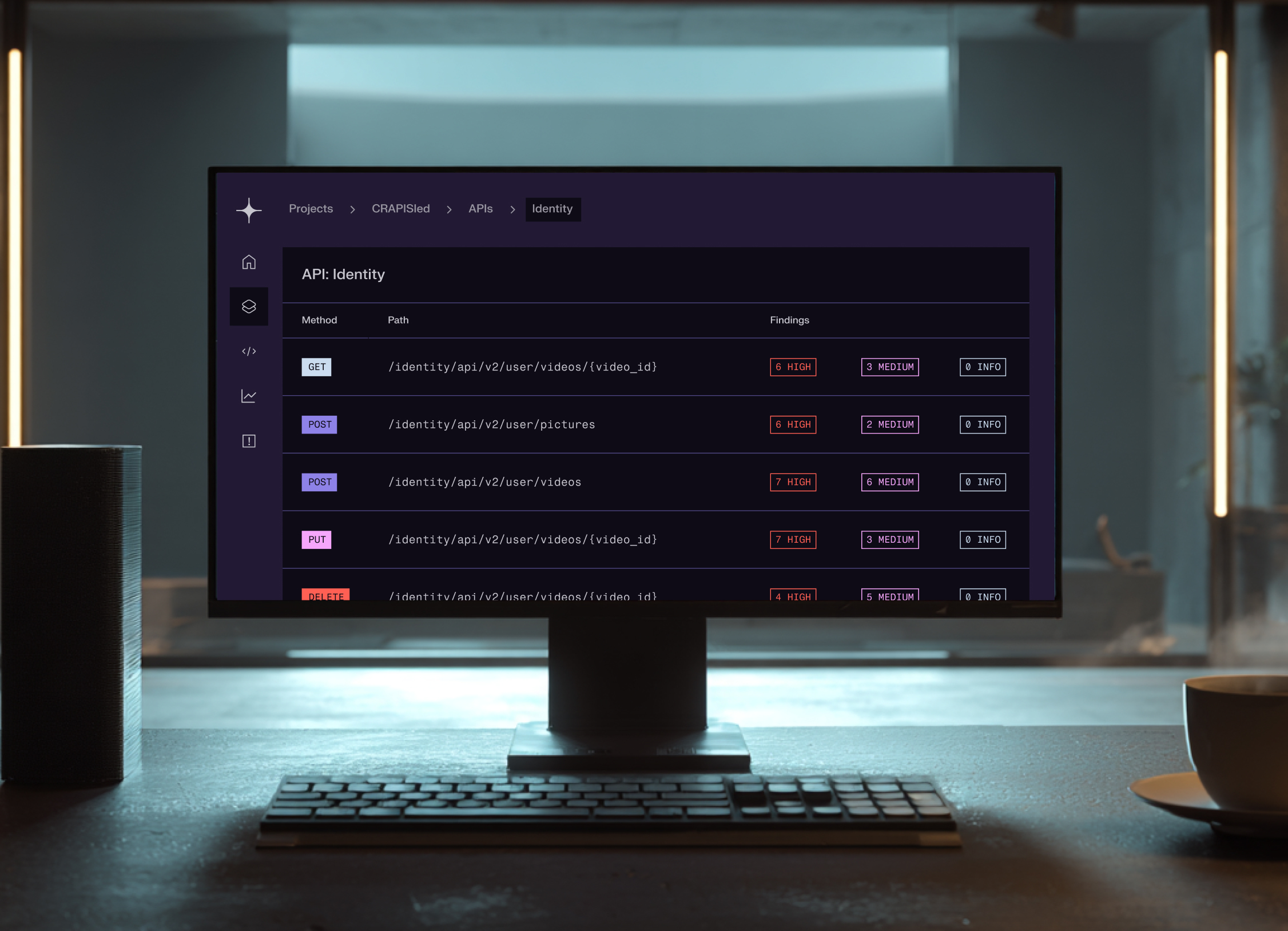
Your tools surface more potential vulnerabilities than your team can check. Staris tests each one against your running application, tells you which are actually exploitable, and sends the patch along with the proof.

Get a Demo
Context is what makes validation expensive

Security teams tell us the same thing: they're spending millions on AI pentesting and still need a room full of people to check the results. Detection got cheap. Validation didn't. The reason is that deciding whether a finding is real usually depends on what the application is supposed to do. An exposed endpoint might be an authentication bypass, or it might be the integration a partner team shipped on purpose last quarter. A permissive query might be an injection path, or the admin tool it was built to be. That knowledge sits with your engineers, so every candidate finding costs you someone's time. Staris reads the code, policies, and data model to learn intended behavior, then tries to exploit the finding. If it can't prove it, it doesn't send it to you.

The Validation Gap

Finding potential vulnerabilities is now nearly free. Proving which ones are real still takes expert human time — so it gets rationed. Batched into one pentest a year, or piled into a queue your team can never clear. The gap between found and proven is where risk actually lives.

590CANDIDATES6PROVEN

Staris closes it. Every finding is proven with a working exploit against your running application and ships with the patch that closes it — at your release cadence, not once a year.

How Staris Transforms Application Security Testing

From automated penetration testing to verified vulnerability reporting, discover how Staris delivers faster, more comprehensive security validation for your team.
What checking findings costs today

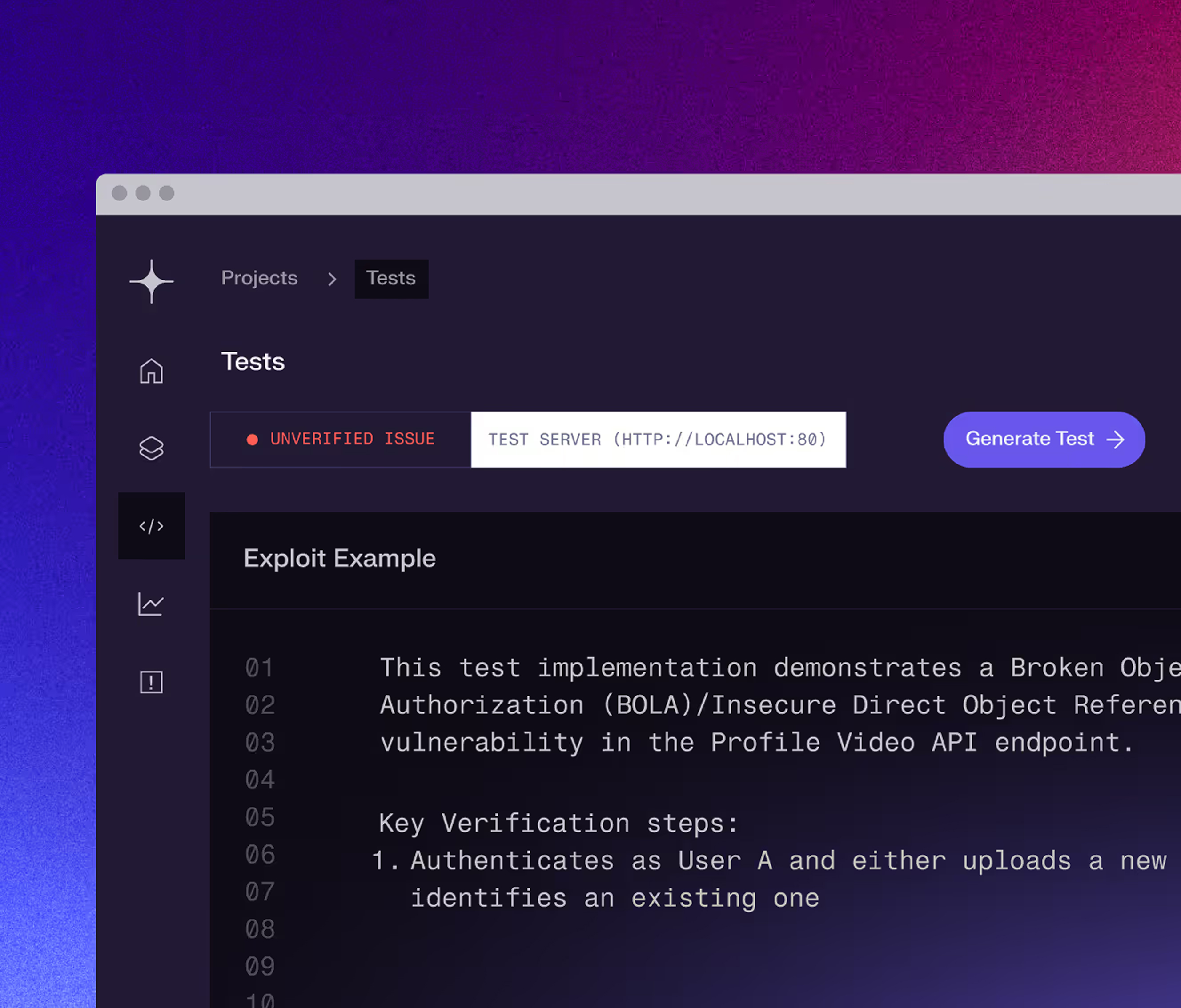
In one recent engagement an AI testing run produced 590 vulnerability candidates. Six were real. At 30 minutes of engineer time per candidate, which is optimistic, working through all 590 is about 295 hours, or seven weeks of one engineer to find six things. Staris worked the same 590 candidates in 7 hours and 12 minutes and returned the six with working exploits and PR-ready patches.

You can keep the tools you already bought

SAST, DAST, SCA, and AI pentesters all answer the same question: what might be wrong. They're good at it and getting better, which is why your queue keeps growing. Staris answers the question that comes next: which of these can actually be exploited, and what's the fix. Nothing needs to come out of your stack. The queue just gets shorter.

Trusted by teams shipping secure software

Bill Gambarella
CEO
,
OpsHelm
By reducing the time required for each test and making every test fit within our budget, we’ve been able to scale our security coverage without compromise. The quality of Staris AI’s results has actually exceeded what we had before, giving us both speed and confidence.
Leading-Edge AppSec Tools.

Findings scoped to your application

Staris reads your code, policies, and data model to learn what each application is meant to do, so a deliberate integration doesn't arrive labeled as an authentication bypass.

Validation measured in hours

Testing runs at machine speed against your running application, so your team receives a short list instead of a queue.

Patches arrive with the findings

SAST, DAST, SCA, and AI pentesters all answer the same question: what might be wrong. They're good at it and getting better, which is why your queue keeps growing. Staris answers the question that comes next: which of these can actually be exploited, and what's the fix. Nothing needs to come out of your stack. The queue just gets shorter.

Frequently Asked Questions

What is Staris?

Staris is a continuous application security validation platform that proves which vulnerabilities are actually exploitable in running applications. Staris replaces scanner noise and point-in-time pentesting with continuous, provable security validation.

What does "continuous, provable validation" mean?

Continuous, provable validation means security testing that runs on a recurring, release-aligned basis and produces validated evidence of exploitability. Instead of relying on point-in-time pentesting or large volumes of scanner findings, teams use Staris to continuously prove which vulnerabilities actually matter.

Who is Staris built for?

Staris is built for software companies that ship frequently, expose APIs or customer-facing applications, and need provable security validation without relying entirely on manual pentesting. It is especially well suited for ISVs and product teams that have outgrown scanner-heavy workflows.

What does Staris replace in my current stack?

Staris replaces point-in-time penetration testing and the manual validation work your team does on scanner output. Your existing tools keep surfacing candidates; Staris proves which of them are actually exploitable and ships a working exploit plus a PR-ready patch on every finding.

What types of vulnerabilities does Staris find?

Staris focuses on exploitable vulnerabilities that can be demonstrated end-to-end — including broken access controls, authentication bypasses, injection flaws, and business logic errors. Each reported finding includes proof of exploitability with steps to reproduce, so your team fixes only real, validated risks instead of triaging unverified scanner alerts.

What does "verified" or "proven exploitability" mean?

Verified vulnerabilities are security issues Staris has successfully exploited, eliminating false positives and ensuring real-world risk relevance.

How does Staris simulate real attacker behavior?

Staris AI simulates real attacker behavior against your application, executes controlled exploits, and confirms only real, exploitable vulnerabilities with contextual remediation guidance.

What kind of remediation guidance does Staris provide?

Staris provides actionable remediation guidance mapped directly to the exploited vulnerability, including root cause, impact, and code-level recommendations.

Can I limit what Staris tests?

Yes, you have complete control over the scope and actions Staris takes ensuring it never performs an action against your environment you didn't approve.

How does Staris differ from traditional vulnerability scanners?

Scanners, SAST tools, and code review products identify potential vulnerabilities or risky patterns in code. Staris validates whether vulnerabilities are actually exploitable in the running application. That is why Staris helps teams reduce false positives, prioritize real attacker paths, and move from possible findings to validated risk.

Does Staris replace SAST and DAST?

No — and that's deliberate. SAST, DAST, and SCA answer the question what might be wrong? Staris answers the next one: what is actually exploitable, and what's the patch? Your scanners keep doing what they do well. Staris reads the application in context, proves which candidates are real — including the broken access controls and business-logic flaws scanners can't reach — and ships a PR-ready patch with each one. Nothing gets ripped out. The queue gets shorter.

How does Staris differ from traditional penetration testing?

Staris AI provides continuous security validation through verified exploitation and contextual remediation guidance.

How does Staris handle source code access and data isolation?

Staris analyzes application code and behavior to validate exploitability, but deployment options allow organizations to retain full control of their source code and infrastructure. Staris can run within customer-controlled environments, ensuring sensitive data remains secure and isolated.

Does Staris train its models on customer data?

No. Staris does not train its models on customer application code or sensitive data. Staris analyzes applications solely to validate security and provide remediation guidance, and customer data remains isolated within the deployment environment.

Can Staris run in a private VPC or be self-hosted?

Yes. Staris supports deployment in private VPC and fully self-hosted environments, allowing organizations with strict security and compliance requirements to run Staris entirely within their own infrastructure.

What security practices does Staris follow?

Staris follows modern security best practices, supports private deployments, does not train on any customer data, and never exposes customer data outside authorized environments.

Does Staris support RBAC and SSO?

Yes. Staris supports role-based access control (RBAC) and single sign-on (SSO) in Pro, Validated, and Enterprise plans.